Why Fiber Can Make You Bloated: How to Build a Gut That Can Handle More Foods
🎧 Listen to this episode on iTunes | Spotify | YouTube
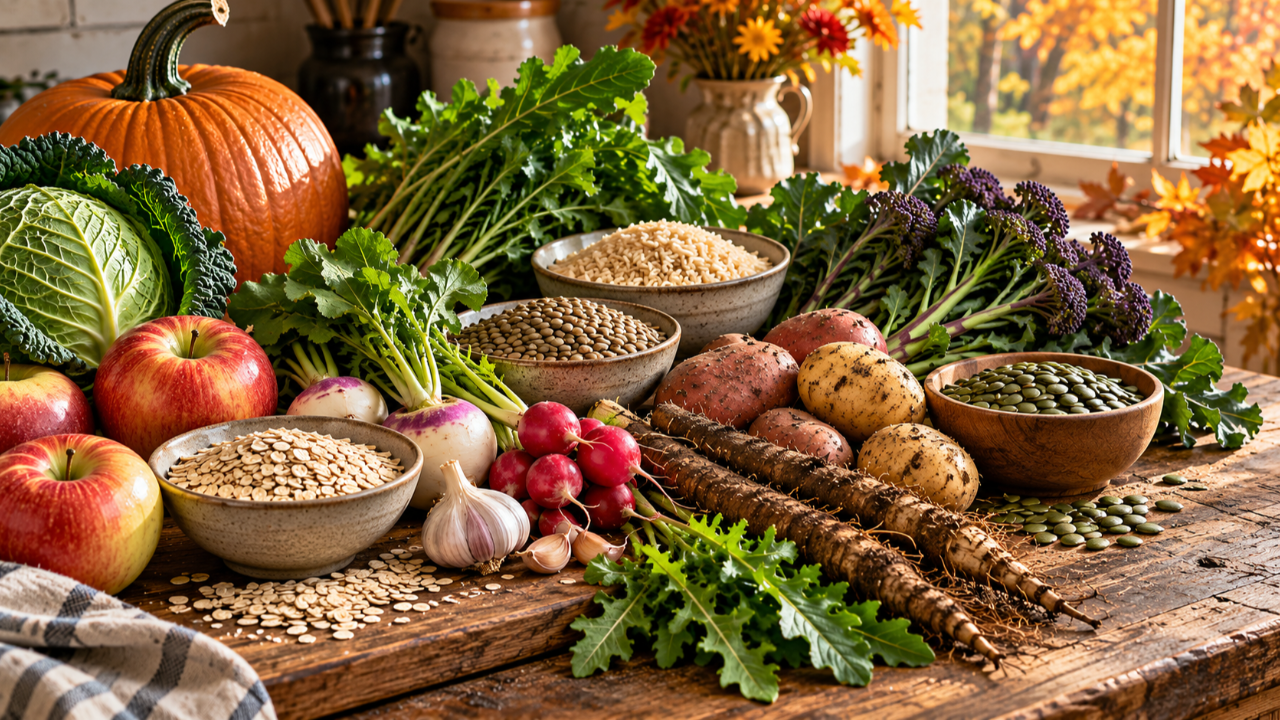
I love the foods of fall. Apples, oats, potatoes, roots, greens, beans, lentils, seeds, soups and stews — all of the foods that naturally bring more variety and substance to the plate.
And for some people, eating this way feels terrible.
That is the part I think gets flattened when we talk about fiber.
We hear a lot about eating more plants, feeding the microbiome, increasing fiber and getting more diversity into the diet. Broadly speaking, those are good goals.
But knowing fiber is good for you and actually having a digestive system that can comfortably work with more of it are two very different things.
There are people who cut almost all fiber out and feel immediate relief. There are people who tolerate beans beautifully but react badly to a dozen other plant foods. And there are people who live with so much gas, pressure, bloating or distention that eating enough plants — or sometimes enough food in general — becomes genuinely difficult.
I have been on the extreme end of that myself. There was a period when too many fiber-rich, highly fermentable plant foods in one meal could leave me in so much gas pressure that I felt like something was seriously wrong.
So when someone says, “Just eat more fiber,” I understand why that can sound ridiculous.
At the same time, I do not think the answer is to decide your body simply cannot handle these foods and make your diet smaller forever.
That tension is what I wanted to explore in this episode.
Fiber is not one single thing
One reason the conversation gets oversimplified is that different fibers behave differently in your digestive tract.
Resistant starch, beta-glucans, pectin, inulin, FOS, cellulose and other fibers do not all feed the exact same organisms or produce the exact same response.
Beans and lentils provide resistant starch and other fermentable carbohydrates. Oats and barley contain beta-glucans. Apples contain pectin. Garlic, onions, leeks and burdock contain inulin and FOS. Potato skins, whole grains, vegetables, legumes, nuts and seeds bring still other forms of fiber into the mix.
That diversity matters because your microbial ecosystem is also diverse.
But knowing that does not tell us how much your gut can comfortably handle today.
Why the same food can land completely differently
Two people can eat the same bowl of lentil soup and have completely different experiences.
One feels fine.
The other spends the next eight hours bloated, uncomfortable and wondering why they bothered trying to eat something “healthy.”
That difference can be influenced by digestion upstream, transit time and motility, microbial composition, the amount of fermentable food being consumed at once, and what is already happening inside the gut ecosystem.
This is one reason I am far more interested in asking what can your gut actually do? than simply asking whether you are eating enough fiber.
Can you digest a reasonable variety of foods without spending the rest of the day uncomfortable?
Can your bowels move consistently?
Can foods that once caused problems gradually come back into your life?
Is your digestive system becoming more capable over time?
Those questions tell us a lot.
More is not always the first move
When I am working with someone, I want to understand where their gut is now.
How much fiber are they already eating? Which foods are going well and which are not? What happens when the amount goes up? What does their digestion, motility and microbial terrain look like underneath those reactions?
Sometimes we need to adjust the amount of fiber being consumed before increasing it.
We may need to improve digestion or motility, work on the larger gut environment, or simply stop piling more “healthy” foods on top of a system that is already telling us it has reached its threshold.
This is also why I sometimes use very small exposures to a food rather than jumping straight to a full serving.
A few tablespoons of beans in an otherwise familiar meal can tell us more than loading breakfast, lunch and dinner with multiple new prebiotic foods and then trying to figure out what caused the aftermath.
The goal is not to hit a fiber number because we know fiber is good for us.
The goal is to understand what your gut can handle now, respect that threshold, and then work toward increasing its capacity over time.
I want your food world to get bigger
Restriction can absolutely have a place.
There are times when pulling something out temporarily gives the digestive system room to settle or gives us useful information.
But temporary relief and long-term resilience are not the same thing.
If your version of gut healing keeps requiring more foods to disappear, I think it is worth asking what has actually changed underneath the restriction.
One of my favorite things to hear from a client is some version of:
“I can eat beans again.”
Not because beans are magical.
Because that usually means something about their capacity has changed.
And greater food tolerance affects more than nutrition. It can mean easier meals, more seasonal variety, less fear around restaurants, more flexibility when traveling, and less mental energy spent managing every bite.
A wider food world can create a wider life.
That is what I mean when I talk about rebuilding gut capacity.
🎧 Listen to this episode on iTunes | Spotify | YouTube
Want help understanding what is happening in your gut?
If digestion is only one part of a larger picture for you — bloating, food reactions, inconsistent bowels, chronic symptoms that overlap, or a diet that keeps getting narrower — this is the kind of work I do inside Minerals & Microbes.
I use HTMA, BiomeFX microbiome testing and ongoing 1:1 support to look at digestion, motility, microbial patterns, mineral relationships, food tolerance and how your body responds as we make changes over time.
The goal is not another generic gut protocol.
It is to understand the larger pattern, figure out what actually deserves attention next, and help your body build more capacity without making you feel worse in the process.
Learn more about Minerals & Microbes
Stay empowered with my weekly updates!
If you enjoy reading my posts, please consider being a part of the tribe that is being built here. You're information will not be shared.
